Rockingham County Chimney

We dedicate this chimney monument to resilient residents of Rockingham County who were displaced from their homes in Shenandoah National Park. This structure stands as a testament to their enduring spirit and rich history. May it serve as a reminder of the community's strength and memories that will never be forgotten. Together, we honor their legacy and the beauty of the land they once called home.
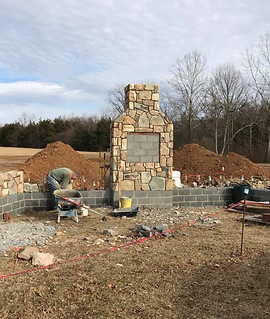
Monument Under Construction


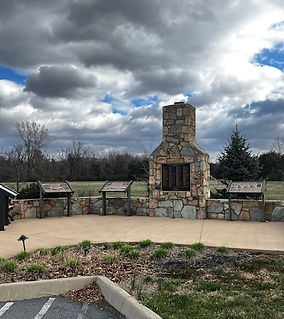
Final Chimney
%20copy.jpeg)

The monument includes a plaque bearing the names of residents removed from their homes in Rockingham County during the establishment of Shenandoah National Park, preserving the memory of those whose lives were affected by the park's creation.

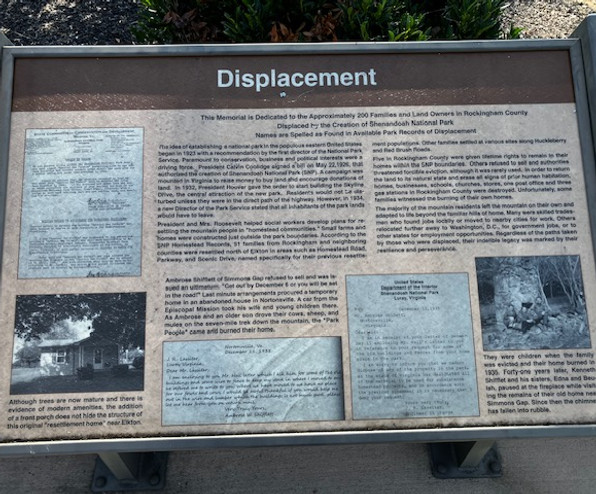
This photograph shows one of the interpretive kiosks describing the displacement of families in Rockingham County during the creation of Shenandoah National Park. The exhibit explains how mountain residents were required to leave their homes and communities as the park was established.
This interpretive kiosk explains the daily lives of the mountain families who lived here, offering insight into their farming practices, community life, and the realities of living in the Blue Ridge Mountains.

Schools and Churches of Rockingham County’s Mountain Communities
This kiosk highlights the schools and churches that served the mountain communities of Rockingham County before the creation of Shenandoah National Park. More than places of learning and worship, these institutions were the centers of community life, bringing together families who lived along the ridges, hollows, and mountain slopes of the Blue Ridge.
One-room schools provided education for children of all ages, often with a single teacher serving an entire community. Churches hosted weekly services, revivals, weddings, funerals, and social gatherings, helping to strengthen ties among neighbors and preserving traditions that had been passed down for generations. These buildings served as important gathering places where residents shared news, celebrated milestones, and supported one another through life's challenges.
When mountain families were displaced during the establishment of Shenandoah National Park in the late 1920s and 1930s, many of these schools and churches were left behind. Though the buildings are gone, their influence remains an important part of Rockingham County’s history. This kiosk honors the educators, ministers, students, and congregations who helped build and sustain these close-knit mountain communities.

How Mountain Families Made a Living
This kiosk explores the diverse ways mountain families in Warren County earned a living before the creation of Shenandoah National Park. Residents relied on a combination of farming, livestock raising, orchards, timber work, hunting, fishing, and gathering forest products to support their households. Many families practiced subsistence agriculture, growing much of their own food while producing goods to trade or sell in nearby towns.
The mountains provided both challenges and opportunities. Families adapted to the rugged landscape through hard work, self-reliance, and strong community ties. Some residents worked in local industries such as logging, sawmills, and mining, while others supplemented their income through seasonal labor and skilled trades.
By highlighting the resourcefulness and resilience of these communities, the kiosk helps visitors understand the daily lives of the families who once lived in the Blue Ridge Mountains and whose homes and lands were later incorporated into Shenandoah National Park. Their labor, traditions, and connection to the land remain an important part of Warren County’s history and heritage.

This kiosk features a map of the area, providing geographic context for the communities that once lived in these mountains.
